Showing posts sorted by date for query savran pogrom. Sort by relevance Show all posts

Saturday, September 28, 2024

The Pogroms of Savran 1917 - 1921

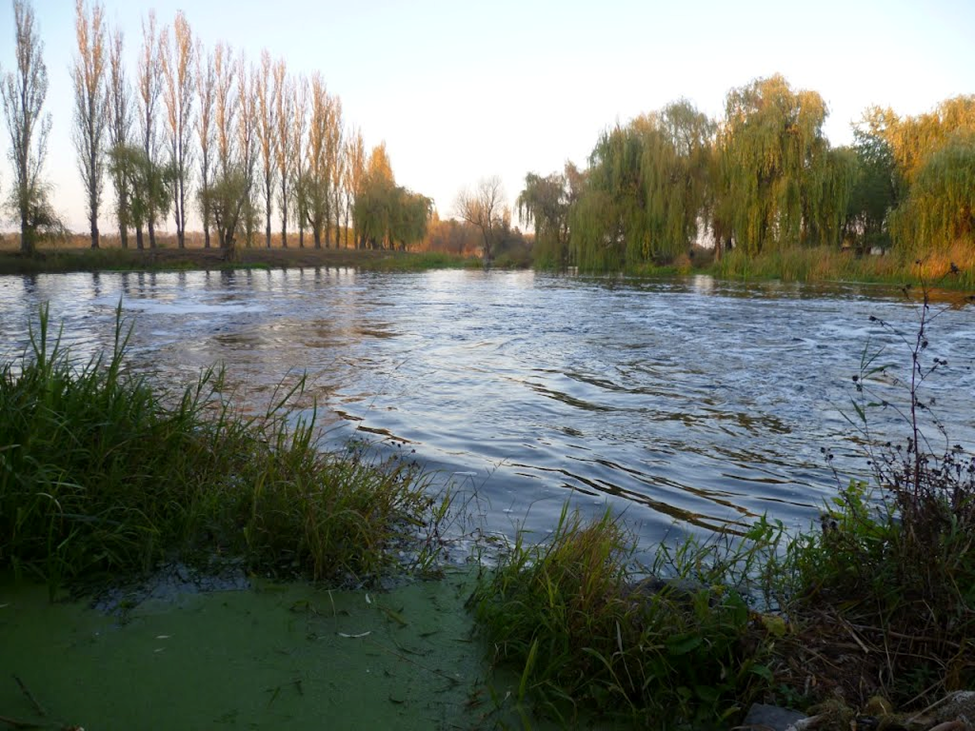
View of the Southern Bug River near Savran

Trigger Warning: Graphic Violence Described Below

Introduction

Growing up in middle-class New Jersey in the 1980s and the 1990s, the horrors of the Holocaust seemed like distant echoes in other people’s ears. I knew Holocaust survivors and those born in the Displaced Person (DP) camps of central Europe – and I was exposed to the graphic truth as part of both my secular and religious education. Still, the reality of it seemed distant because my own ancestors had come to the US decades before those horrors. My kind of life makes that violence unthinkable.

Paradoxically, although the horrors of the pogroms that arose in the aftermath of WWI had happened longer ago, they felt closer to me because my grandmother was close to me. Rose Broitman Telles, my maternal grandmother, lived just a few doors down from us and was a constant presence in my childhood. She occasionally told me snippets of stories of her childhood. Of being born in the small shtetl of Savran in Podolia, of her father being a lumber merchant, of being hidden as an infant in a Russian stove while soldiers ransacked Savran with overwhelming violence - a crucifix around her neck as a sign for mercy from the mob, of fleeing Savran with the help of local peasants who had worked for her family – only to be robbed by them and others. Of the dangerous flight from Podolia to Romania, where they lived in poverty for several years. And finally, of their deliverance to freedom in Canada and eventually the United States. You can read about details of their immigration experience here, here, here, and here.

By Hanna Zelenko, CC BY-SA 4.0, https://commons.wikimedia.org/w/index.php?curid=3664417
Russian stove in a peasant hut. Wikipedia.

Grandma Rose was an infant when she left Savran and barely more than a toddler when she left Romania. Her details of the events of her early life were based on stories she had been told by her parents, older siblings, and relatives. And my grandmother was not great with details. In contrast, I’ve been obsessed with discovering the details of our family’s story. This post describes the massacres they were fleeing from. 

The Ukrainian War of Independence: A Primer

There are a few things that you need to know about the Ukrainian War of Independence to put what happened in Savran into context. Jews had been in what is now Ukraine for several centuries, in part invited by Polish aristocracy to manage the economy as Christian peasants worked the land as serfs. Jews were the merchants, the tavern keepers, the money lenders, and the crafts people.

World War I saw the fall of the great empires of Europe, including the Russian Tsars who controlled what is now Ukraine for hundreds of years. With the monarchy toppled, there was a power vacuum in Ukraine. Three main groups fought to fill that vacuum:

  • The White Russians, who sought to revive the Tsarist monarchy. Anton Denikin was their most prominent general. 
  • The Red Russians, who sought to create a communist/Bolshevik/Soviet state. Mikhail Frunze and Vladimir Antonov-Ovseenko were the most prominent generals for the Red Army.
  • Ukrainian nationalists, who sought to create an independent, democratic, and pluralistic Ukraine. Symon Vasyliovych Petliura was their most prominent general. 

In addition to those three groups, there were unaffiliated warlords, bandits, and anarchists who sought nothing but wealth for themselves. 

All of these groups had one thing in common. Each targeted Ukraine’s Jewish population. The Whites saw the Jews as communists, responsible for the fall of the monarchy and the assassination of the Tsar. The Reds saw the Jews as capitalists, taking advantage of the labor class. And while the urban Ukrainian intelligencia saw Jews as a vital part of a future independent state, the soldiers fighting the war on the ground saw Jews as foreigners in their midst responsible for the poor conditions of the peasants.

Orthodox Church in Savran, built 1912. The building is now the “House of Culture.” Courtesy of the Savran Library.

This is the background for what happened between 1917 and 1921 in hundreds of towns across Ukraine, including Savran. Multiple first-hand accounts of the violence of these years in Savran are quite consistent. Based on those accounts, I’ve developed the timeline of atrocities below. 

The Terrors of Savran

March 1917: Red Soldiers Come To Savran

A Jewish self-defense group, "Agudat Hamagen," was created- led by a Dr. Klein (or perhaps Dr. Adelman, according to Gootnick, 1987) to protect the Jews of Savran in the absence of civil authorities. The peasants of the town demanded that they be disarmed, but the group refused.

A few weeks later, a small group of Red soldiers came through the town en route to nearby fighting. Several of these soldiers were drunk. The Agudat Hamagen shot some bullets into the air to scare these soldiers off, but somehow one soldier and his horse were shot and killed during a confrontation.

Fearing retribution, Dr. Klein fled with his son, but was caught and beaten nearly to death by peasants. His father-in-law, Leib Kirzner (or Alters in another account), was arrested and later brutally killed for refusing to reveal the location of Jewish weapons. 

The chaos worsened as Jewish homes were looted and set on fire. Local peasants joined in with the soldiers, escalating the violence. Although the Jewish self-defense group managed to drive off some of the attackers by standing guard and firing shots throughout the night, the violence continued.

Dr. Klein and his father-in-law were eventually killed. “The peasants made a circle around him with music playing, and  began dancing. They killed him using whatever they had, including stones and wood, causing his blood to spill all over the street until he was dead and cut up into pieces.”

The Agudat Hamagen was no more, and there was nobody remaining to protect the Jews of Savran from the horrors to come.

September 1919: Bandits

In September 1919, a warlord named Kazakov arrived in Savran with a group of armed mercenaries. They kidnapped two of the local rabbinical judges, Rabbi Kalman Berditchevsky and Rabbi Zvi Braverman, as well as a local philanthropist Yakel Dechtyar. The bandits killed seven Jews as they fled the village for the countryside. Kazakov kept the rabbis as hostages and sent Mr. Dechtyar back to Savran to collect 200,000 rubles cash, clothing, boots, and dry goods as ransom.

In a period of about an hour, the town gathered the funds and sent it to Kazakov, but the delegation that carried the money did not find the mercenaries. Instead, they found the rabbis dead, having been mutilated. A peasant who remained with the rabbis’ corpses related that they had been tortured to death and their beards shaved off.

The bandits used them for sadistic entertainment.They had been ordered to sing a Sabbath hymn and to dance and afterward forced them to eat eggs with ash. Later, the townspeople found two sons of a local resident Moishe Bershadsky that had been shot to death and thrown into the Bug River. These boys were cousins of my grandmother.

By Unknown author - This image is available from the United States Library of Congress's Prints and Photographs divisionunder the digital ID anrc.05416.This tag does not indicate the copyright status of the attached work. A normal copyright tag is still required. See Commons:Licensing., Public Domain, https://commons.wikimedia.org/w/index.php?curid=12748809
Anton Denikin, leader of the Tsarist White Army during the Ukrainian War of Independence. 

December 1919 – March 1920: The Whites Attack

The worst violence to befall Savran occurred at the end of December 1919 and continued into the early months of 1920. It was then that the notorious Wolf Brigade of the White Russian Army came to Savran en route to nearby Kryvoe Ozero. In the course of this period, they managed to kill many Jews in a series of deadly pogroms, often aided by local peasants. Here are a few accounts of what occurred:
  • As the Wolf Brigade rampaged, “…those who hid in holes and cellars froze and became sick from the cold and hunger. Parents did not know the fate of their children and children did not know the fate of their parents.”
  • “All the Jews were killed by crude weapons. One Jew pleaded to be killed by a rifle and got this answer: ‘Every bullet is now very expensive, pay us the bullet price, and you will get killed this way’.”
  • “Many children froze to death, in addition, they abducted the wives and violated young girls.”
  • “The killing lasted three days, and after ten more days, more Danikinian factions came, and again butchered, raped, robbed and pillaged the town’s Jews. The casualties’ toll came to approximately 800 people. Many of the Savarn Jews fled to the nearby villages where they died of cold or hunger.”
  • “They took 200,000 rubles out of the old man Boyes hands and promised when he gave the money they would let him live. But after taking his money, they put him against the wall, poured oil on him, and torched him alive. While he burned, they counted the money in front of his eyes. Then they killed his son.
  • “They found Saul Chenoaus’s five-year-old son hiding under his bed. They asked him “Where is your father?” "I don’t know," the boy said. Immediately they cut him to pieces and threw his remains to the dogs.”
  • “Israel Arages' wife, a very beautiful and graceful women, they took, raped, and decapitated.”

April 1920: The Local Peasants Make Their Intentions Clear

Around Passover 1920, a Jewish student from Savran traveled to Odessa with two Christians, transporting two wagon loads of sugar. They spent the night at a train station where the student had 35,000 rubles stolen from him. Reporting the theft to the new Bolshevik authorities, a search was conducted leading to the arrest of the two Christians, who were found with a large sum of money, counterfeit currency, two revolvers, and the confiscated sugar. Upon learning that the two Christians had not returned, the peasants of Savran responded with threats of violence towards the Jewish community, posting a proclamation that demanded the release of their people. This “warning” to the Jews of Savran said: 

Tatars, Kikes, and Communists
If you don't return our people to us, we will cut all of you. Petliura's men cut you but didn't finish. Denikin's men cut you but didn't finish. We will kill all of you; even a child in a cradle will not be spared. 
Union of Exterminators 

Testimony of Mademoiselle Bersheider about the incident with the students returning from Odessa. The account is written in Yiddish and Russian. This incident is also described in “Hebrew Yearbook for Autobiography, Ethnography and Folklore - Reshumoth”

Essentially, this “Union of Exterminators,” made up of individuals from the Savran community, was saying that while the Ukrainian Nationalist Army (Petiura) didn’t kill all of the Jews and the White Army (Denikin) didn’t kill all of Jews, they’d finish the job if the two criminals weren’t returned. An especially chilling note considering that the Jews of Savran were not the ones in custody of the two men. 

June 1920: The Whites Return

Factions of the White Russian army came back to Savran as they were fleeing defeat by the Red Army. They joined with local gangs and seized approximately 200 women and girls who they then raped, mutilated, and burned alive. Reports indicated that “old people were butchered, and little children were torn to pieces which were thrown to the faction's dogs.” The Jews cowered in cellars. Others tried to leave the town but were killed as they tried to flee. 

Their situation did not improve even after the White Russians left, as the town saw a period of disease and starvation. The war had brought typhus to almost every family, and there was no medical treatment available.

September 1920: The End to the Violence?

By fall of 1920, the Soviets were in clear control of this part of Podolia. There were several incidents of violence against the Jews of Savran by local peasants, but Red Army soldiers tamped down the violence with threats to local Christian leaders. However, the Jews of Savran had nothing left. So many had been killed, fled, or died of disease that their once vibrant community was essentially destroyed. Those who remained were traumatized and had no livelihood to return to. Years of war made food scarce. In short there was precious little hope for their future.

Le Village En Feu (Village on Fire) – Marc Chagall - 1940 

Afterwards

The Reds, the Whites, and the local gangs all targeted the Jewish population of Savran even though they had no knowledge of them personally. Jews were worth humiliating, robbing, raping, and killing just because they were Jewish. Each group had rationalization and pretext, but in the end, it is just another example of sadistic antisemitism. It is just one in a long line of inexcusable terrors that have befallen the Jews for more than two millennia. 

My family was there. I don't know when they left Savran. I don't know what atrocities they personally faced. I don't know how the trauma affected them then or for the rest of their lives. And I don't know how it affects me generations later. 

When the atrocities perpetrated against innocent Israelis on October 7, 2023 started becoming clear, every newscast said that it was the “biggest massacre of Jews since the Shoah.” But my mind went to Savran. Never again should never have had to be said.

Bibliography

Accounts of the Savran Pogroms

General References on the 1917 - 1921 Ukrainian Pogroms 

  • Avrutin, Eugene M., Bemporad, Elissa. (2021). Pogroms: A Documentary History. Oxford University Press.
  • Bemporad, Elissa (2019). Legacy of Blood: Jews, Pogroms, and Ritual Murder in the Lands of the Soviets. Oxford University Press.
  • Coder, Aaron. (1921). Ukrainians And Jews: After The Downfall Of The Russian Empire, 1917-1920. Second edition. Independently published.
  • Batchinsky, Julian. (2018). The Jewish Pogroms in Ukraine Authoritative Statements on the Question of Responsibility for Recent Outbreaks, Against the Jews in Ukraine. Forgotten Books: London, UK.
  • Granick, Jaclyn (2021). International Jewish Humanitarianism in the Age of the Great War. Cambridge University Press. 
  • Heifetz, Elias. (1921) The Slaughter of the Jews in the Ukraine in 1919. Seltzer: New York, New York.
  • Evidence of Pogroms in Poland and Ukraine: Documents, Accounts of Eyewitnesses, Proceedings in  Polish Parliament, Local Press Reports, etc, (1919), New York: Information Bureau of the Committee for the Defense of Jews in Poland and Other East European Countries affiliated with the American Jewish Congress.
  • Shtif, Nokhem and Wolfthal, Maurice. (2019). The Pogroms in Ukraine, 1918-19: Prelude to the Holocaust. Open Book Publishers. Translated and annotated by Maurice Wolfthal. Cambridge, UK: Open Book Publishers.
  • Veidlinger, Jeffrey. (2021). In the Midst of Civilized Europe: The Pogroms of 1918-1921 and the Onset of the Holocaust. Metropolitan Books: New York, New York.


Monday, April 3, 2023

Account of the Savran Pogroms 1917 - 1919

As part of my family history research, I've been working to understand the violent pogroms that led my maternal grandmother's family to flee the Russian Pale of Settlement seeking a safer life in the U.S. Ten years ago I found an account of the pogroms in Savran, Ukraine and since that time I've been looking for other accounts that could add to my understanding of the horrors. I recently found a second contemporary account and it is every bit as disturbing. 

WARNING: Graphic Content

Yiddish Text of Pogrom Account - First Page


Savran, Podolia Gubernia, Balta District 

(Peasants – Gangs - Petliyuras—1917-1919)

Avraham Drucker, a 31-year-old merchant from the town of Savran in the Balta District of Podolia-Gubernia, who is currently residing in Warsaw, has consented to narrate his experiences during the pogroms that occurred in his hometown.

In our town, the Jewish community is composed of merchants and craftsmen, while the Christian population comprises peasants, landowners, and craftsmen. In 1905, the peasants in our town contemplated initiating a pogrom, since pogroms occurred in Balta, Bofola, and in the impoverished townlets. However, they were hesitant to do so because they were aware of our organized self-defense group, which had the backing of the state police.

Starting in 1917, several peasants started raiding Jewish individuals, and there were isolated attacks in the city. On the evening of Thursday, March 18, 1917, there were no authorities present in the town, prompting a group of 30 peasants to assemble and demand that the organized self-defense group surrender their weapons. The leader of the self-defense organization was a Jew named Dr. Klein, and Avraham Drucker and 40 other comrades were also members of the group.

The Jews refused to comply with the peasants' demand, causing the peasants to depart. 

A week later, on Friday, March 25, 1917, when the Bolsheviks first retreated from the Petliyuras, a few Bolsheviks passed through our town. Everything was peaceful. Three or four drunken Bolshevik drunkards remained. The Jewish self-defense group was quickly notified, and the entire group gathered together to respond. 

When the Jewish self-defense group demanded that the drunken Bolshevik looters leave, they refused to comply. As a result, we fired shots into the air. However, another person also fired a shot, which hit a Red with a horse and killed them, causing a commotion. The self-defense group fled, leaving only six men behind. Observing the chaos in the town and hearing rumors that the Jews had killed a soldier without cause, the remaining six individuals also departed. Dr. Klein, who was overwhelmed with fear, rushed home and grabbed his son, along with two revolvers and a rifle, before fleeing the city. His wife was not present in the house. 

Upon arriving home, Dr. Klein's wife was informed of the events and immediately began searching for him. Meanwhile, the peasants noticed the doctor fleeing with weapons outside of town and chased after him. They caught up with him near a Gentile's home and severely beat him, nearly to the point of death. During this time, the doctor's father-in-law, Leib Kirzner, arrived at the scene. The peasants arrested Kirzner but left the doctor, assuming he was dead. They hoped that Kirzner would reveal the location of the Jewish weapons, but he refused to do so. 

Drucker accompanied a peasant to the doctor's location and brought him back to his home. Upon learning that the doctor had returned home, the peasants looted his residence, breaking windows and doors in the process. As the peasants continued to loot Jewish homes and even set fire to the Jewish center, the Jewish residents began hiding and eventually fleeing the town. The looting persisted until the Sabbath, after which the town quieted down a bit and people started to venture out into the streets. There was an attempt to release the doctor's father-in-law, but it was not successful until the afternoon. 

Around 2 PM in the afternoon, a patrol of six Red riders arrived. Upon seeing the Reds, the peasants claimed that the Jews had killed a soldier, one of their comrades, over a sum of three kopeks. The Reds didn't take any immediate action and instead waited for the soldier's funeral to take place. Upon hearing of the funeral, the Jews fled the town. The funeral took place at 3 PM, accompanied by music, and a ribbon was placed on the casket that read, "The Jews killed our comrade for 3 kopeks." 

During the funeral, the peasants released the doctor's father-in-law, stripped him naked, dressed him in a white shirt, and led him between two horses to their cemetery. After the funeral, the Red Army conducted a big parade, and on their way back, they brought Kirzner, the Jewish man, back to town. The peasants made a circle around him with music playing, and they began dancing. They killed him using whatever they had, including stones and wood, causing his blood to spill all over the street until he was dead and cut up into pieces. After the killing, the looting continued until 8 PM. 

In some parts of the city, members of the Jewish self-defense organization armed themselves and gathered to push back the attackers. As they approached a Jewish home, they shouted, "Comrade, leave!" Gradually, the self-defense organization managed to drive the bandits out of town. They stood guard all night, firing shots to prevent anyone from entering the town. Finally, the town quieted down.

In April of 1917, Drucker traveled to Balta. Subsequently, the Austrians arrived and occupied the area until August 25, 1918. During this time, there was peace. The Austrians controlled the Hetmanate—Skoropadskyi. Petliyura emerged and began to drive out the Hetmanates, causing unrest once again. Petliyura's regime divided into two factions, with half supporting the Reds and the other half supporting the Whites. In October 1918, the two factions started fighting against each other. 

During this time, a group of Setchevkias, led by Zabolotny, invaded Balta from Petliyura's gang. About 3 to 4 thousand men accompanied them, and they immediately started firing their guns in the middle of the city. This happened on a Wednesday in October 1918. Throughout the day of their arrival, the Setchevkias gang entered the town, immediately unleashing a campaign of looting and murder. Over the course of the day, 168 Jews were killed in unspeakably cruel ways, and many women were raped. I heard one soldier rape a Jewish seamstress under my window. Her screams were unbearable, and he killed her afterwards.

The pogrom continued for eight days, during which they looted and killed indiscriminately. On the eighth night, they left the city. Ir two weeks, the city was calm, but right-wing authorities, under the rule of Zabolotny and Petliyura's officers. Jews were afraid to even walk the streets. 

The atmosphere of fear prevailed for three months, until November 1919, when the Reds (Petliyuras) started to gain strength and drove out the Zablitonis on a Thursday night. At the station, there was a group of Setchevkes with an armored train, whom the Reds tried to expel. On Friday morning, the Setchevkes fired from the armored train into the city, Snipers fell into the city. This created a terrible fear among the Jews, and many of them fled the city. The situation persisted throughout Friday, until that night when the Whites' cheered that they entered the city. 

The city was already burning and being looted. On the Sabbath, there was a temporary calm, and we ventured back into the city. However, they demanded that a Jewish delegation bring half a million rubles in gold within an hour. When they saw that we weren't bringing the money, they started shooting in the streets on the Sabbath, killing three Jews on the spot. 

This went on from the Sabbath until Wednesday, during which time they killed 238 Jews, who had been hiding in cellars and attics, and looted everything in sight. The brutality included the rape of as many as 300 women, and the assault of eight pregnant women. The killings were particularly gruesome, with dismembered limbs, decapitated heads, mutilated children, and women who were both violated and killed. 

The house where Drucker was—at a Christian—Drucker's Christian host was fortunate not to have been targeted by the gangs that entered the city. On a Wednesday, the gangs went into a cellar where 68 Jews were hiding, and used a bomb to blow open the door before opening fire and stealing money. After this incident, the city remained quiet until shortly before Purim in 1919, when the city was left without any authority. 

Zabolotny and the Reds then began fighting over Balta, resulting in the Zabolotnis entering the city and killing 132 Jews. Attempting to hide from the gangs, many Jews drowned. The remaining Jews fled the city as the gangs continued their looting. This continued until Sunday when Drucker left for Savran. He faced many challenges on the way, as he was traveling with his wife and children. The non-Jewish locals were too afraid to let them stay overnight, so they had to pay 20 rubles to stay with a gentile on the outskirts of town. The roads were muddy, and the horses had difficulty traveling. 

Finally, after Purim, they arrived in Savran. It remained quiet there until June 1920. During the period spent in Savran, a terrible pogrom occurred. 

A group of marauding gangs seized approximately 200 young girls and treated them like tethered horses. They led them into a stall. Some were raped right on the street. Some of the girls had their hair set on fire with naphtha, causing them to burn alive. A few of them had their breasts mutilated in the middle of the road.

Two rabbis were sent on a delegation to a village near the river Bug. They were ordered to take out boiling eggs from a pot using their bare hands. The attackers then set fire to their beards and forced them to dance. This incident occurred in Chemerpil [small village now in Kirovohrad Oblast across the Bug River – SAW]. Later, the attackers cut off their fingers and ears in small pieces before amputating their hands and feet. 

Upon Drucker's return home, the Jewish community learned about the tragic fate of two Jewish brothers, Yosef and Yehoshua Bershader, who were hunted down and drowned in the Bug River. In addition to this, there were many women in the community who were suffering from typhus. When the mothers warned them that they could contract typhus, the men replied, "Let typhus be afraid of us. We are not afraid of typhus." Many men were killed because they did not allow their wives to be raped. Many of the dead could not be collected because they were dismembered. One person, Fischel Dicker, was strangled with a noose 10 times in order to force him to reveal where his money was. 

In May 1920, Drucker and his family left Savran and traveled to Odessa. From there, they went to Bershid when the Poles entered the area. After that, they went to Poland. By the time Passover 1921 came around, Drucker is considering leaving again, but he is uncertain about where to go.

Avraham Drucker
August 8, 1921


Account of Savran Pogroms by Avraham Drucker, 1921; YIVO Archives; Records of the Mizrakh Yidisher Historisher Arkhiv; RG 80; Folder 323; Pages 30028 - 30033. Translation by Dov Bergman.


Thursday, August 8, 2013

Savran Pogrom

Growing up, my grandmother told me stories of fleeing Ukraine in the wake of the Russian revolution to the relative safety of Bucharest, Romania. My grandmother's story was that during a pogrom in their home village of Savran, Ukraine she was hidden in an oven to avoid injury. The mental image of my grandmother in an oven puzzled me: was it like the oven in my New Jersey kitchen? Or the ovens of the Nazi camps?

Either way, I didn't have a clear idea of just what a pogrom was. A few years ago a gentleman sent me an account of a series of pogroms in Savran that occurred shortly before my grandmother's birth at the hands of the followers of Kozakov, Petliura, and Denikin. It is a painful account: translated below. The name "Bershadsky" is mentioned - and I believe he is a cousin.


The Attack on SAVARN in Podolia County
After the Passover 1917, a group of bandits came to Savran to raid the town, and started attacking and raiding people homes,  “AGUDAT HAMAGEN” the protective group, scared them away. One of the bandits was killed. The Christian town people  retaliated, and killed the head of “AGUDAT HAMAGEN,” Dr. Klein, and his father-in-law, Liev Alters, and attacked many Jewish homes and stores.
From there on, there was no rest for the Jews of Savran: Kozakov's troops raided Savran. Kozakov called the two village rabbis and demanded a 200,000 Rubles  “contribution” and made them responsible for all that would happen if this would not be paid within one hour. The town Jews collected the money, but failed to do so in an hour, so Kozakov left the town with the two rabbis, captive, and killed them in a horrific way, torturing them to death, making them eat rotten eggs and burning their beards while singing praises for him. After crossing the river he caught three more Jews, an old man, and the two sons of Moyshe Barshedsky and killed them as well.
The 200,000 rubles where given to the widows and orphans of the rabbis by the town  people.
After a while the troops of Danikin started to come to Savarn, the first group caused no harm, and only asked for food supplies and clothes, but after came Kazaks from those troops, and after taking what they wanted (e.g., food clothes) they took a respected man, Shimon Elizepan, and whipped him fifty lashes just for saying: ”We can’t leave a Jewish town without leaving any  mark passing through.”  They laughed and the man fell to an illness for three months after this.
And when the Danikinians were killed of the hands of the Soviet troops, they came back to Savarn and slaughtered the entire Jewish town folks,  it was Saturday (morning of Shabbat) that the first faction came of fleeing Danikinians  and demanded “contribution” but then the town bells started , and they fled. But at noon came the second faction, and started the slaughter any Jew caught by the faction was killed on the spot. Old people were butchered, little children were torn to pieces which were thrown to the faction's dogs, every women between 12 and 70 years of age were raped  and then killed in many horrific ways.
At first the Danikinians  tortured their victims to get word of the hiding places where they stashed their belongings. After taking their possession they  also took their lives. Thus, they took 200,000 rubles out of the old man BOYKES hands and promised when he gives the money they will let him live, after taking his money, they put him against the wall pour oil on him, and torched him alive, counting the  money in front of  his eyes, while the poor soul  was  screaming  and burning to death. Then they killed his son.
SHAUL (SAUL) CHERNOAUS son, a five year old, they found under the bed, hiding , they asked him ”Where is your father?” "I don’t know" the boy said. Immediately they cut him to pieces and threw his remains to the dogs.
Israel Arages' wife, a very beautiful and graceful women, they took, raped, and decapitated.
 
The faction was accompanied by many of the important Christian community leaders which led them to the hiding places of the Jews.
All the Jews were killed by crude weapons. One Jew plead to be killed by a rifle, and got this answer: “Every bullet is now very expensive,  pay us the bullet price, and you will get killed this way.”
The killing lasted three days,  and after ten more days, more Danikinian factions came and again butchered, raped, robbed and pillaged the town Jews. The casualties toll came to approximately 800 people. Many of Savarn Jews fled to the nearing  villages where they died of cold or hunger. In Savarn few Jewish families stayed, but they were also harassed and driven out by the Christian families.
The state of these families is evident by this fact:
A Jewish student from Savarn traveled to Odessa with two Christians, and they stayed in an inn together over night, were they stole his money: 35,000 rubles. When the Soviets learned of this, they came to the hotel, checked the Christians satchels and found counterfeit money in their possession  and guns. They were of course arrested. After a few days a poster was hanged on a wall in Savarn :
“Communist Yids:
If you will not return our people, we will slaughter you all. Petliura slaughtered you all and didn’t finish; Danikinians slaughtered you all and didn’t finish;  we will slaughter you all - and will not leave even a baby in his crib.
The Alliance of Destroyers.”
(These are the words of Savran refugees.)

The Attack on Savran in Podolia County. from "Hebrew Yearbook for Autobiography, Ethnography and Folklore - Reshumoth" (Volume 3). Berlin 1923 (Moriya – Devir publishers, Jerusalem –Berlin). Pages 425 - 426. 
I am grateful to my cousin Ruby for translating this horrific document.