Showing posts with label genealogy. Show all posts

Monday, November 25, 2024

The Refugee Program Unravels

Abram Broitman told refugee program officials that he was single, but in truth he’d been married for at least 12 years. When he left Bucharest for Canada in July 1924, he left behind his wife, Chaika, and their three surviving children -- Anita, Aron, and Rosa – with another child expected in January. While Abram began establishing a new life in Toronto, his family was preparing to join him, and none too soon: ultimately, Chaika and their children would be among the very last refugees allowed into Canada through the program. 

Refugee Program Recap and Context

The unrest of the Ukrainian War of Independence and the violent pogroms between 1917 and 1920 led tens of thousands of Jews who had been living in what is now Ukraine – and was then part of Russia – to flee to Romania, Poland, and Constantinople in Turkey. These Russian-Jewish refugees were stateless: the new Soviet government refused to repatriate them, and their new “host” countries were unwilling to absorb them or even integrate them into existing Jewish populations. 

In Romania, tolerance of these refugees was particularly low. In 1921 the Romanian government declared its intention to expel the Russian-Jewish refugees – which is to say, to push them back to the Dniester River at the Soviet border, where they would have been shot by soldiers or drowned. Pressure from the League of Nations and other groups led to the repeal of the edict, but in 1923 Romania announced that the Russian-Jewish refugees had to leave by October of that year. Additional international pressure softened this deadline as well, but the writing was on the wall. The refugees could not return to their homes in Russia, could not stay in Romania, and had nowhere to go.

"Children rescued by JDC from the famine area of Bessarabia arrive in Bucharest." 1929. JDC Archive # 11980; NY_00947

A refugee resettlement program was established to rescue these Jews. The program never really had a name; in the relevant documents, there are only references to “the refugee situation,” “Russo-Rumanian Refugees,” the "ICA Quota," "the ICA agreement with the Canadian Government," and a Canadian "concession...to set aside the Immigration Law." The overall program was responsible for resettling refugees in Argentina, Palestine, and the United States, but this blog post focuses on the Canadian arm of the program. For the purposes of this post, then, I will refer to the Canadian part of the Russo-Romanian refugee resettlement program simply as “the program.” 

America, long the refugees’ preferred safe harbor, had established immigration quotas in 1923 and was set to make them even more restrictive in 1924. The Canadian government was less xenophobic than their American neighbor to the south, but only slightly: in addition to requiring that new immigrants to Canada be of sound mind, in good health, and financially self-sufficient, the Canadian Immigration Act of 1919 severely restricted the admission of individuals who had "peculiar customs, habits, modes of life and methods of holding property” that were not aligned with Canadian values. Individuals from specific countries, including Russia, were therefore to be denied entry because those individuals might have “dangerous ideologies” that could infect Canadian society. Between the American quotas and the Canadian restrictions, the 1920’s saw a marked decline in Jewish immigration to North America from Eastern European countries. 

The Canadian chapter of the Jewish Colonization Association, chaired by one Mr. Lyon Cohen, stepped up to help their Russian co-religionists. They appealed to the Canadian Dominion government’s Minister of Immigration, the Honorable J.A. Robb, and his deputy, Mr. W. J. Egan, to allow the entry from Romania of as many stateless Russian-Jewish refugees as possible. 

Portraits of  Lyon Cohen, J.A. Robb, and W.J. Egan
Cohen photograph Who's Who in Canada, Volume 16, 1922, page 247
Robb photograph is in the collection of Library and Archives Canada, PA 043114
Egan photograph from The Ottawa Citizen, Mon, Jun 24, 1957

Mr. Robb approved this new program in October 1923 and agreed to issue 5,000 visas to the Russian-Jewish refugees in Romania. However, there were a few stipulations:

  1. The refugees needed to demonstrate that they had sufficient financial resources that they wouldn’t become a burden on the state. (If they were unable to, the Jewish philanthropic organizations facilitating refugee resettlement had to raise the funds to support them.)
  2. A portion of the refugees needed to settle in the prairie provinces and work as farmers. 
  3. A “fair share” of the refugees needed to be transported on Canadian-flagged ships.

Between November 1923 and October 1924, thanks to the efforts of the ICA, JDC, JCA-Canada, and HIAS, some 2,500 Russian-Jewish refugees were successfully relocated from Romania to cities and farms across Canada. According to JCA annual reports, the number of stateless Russian-Jewish refugees in Romania dropped from 45,000 in 1922 to 13,000 in 1923, and was down to just 1,500 in 1924. Only a fraction of these individuals had gone to Canada; the rest had found their way to other countries that would accept them. By the summer of 1924, there were so few refugees left in Romania that on July 31, the Central Relief committee of the JDC closed its office in Bucharest. It was left to the local representatives of the program to get the last 1,500 refugees onto ships out of Europe. 

In the meantime, although almost all the Russo-Jewish refugees in Romania had been successfully rescued, there were still thousands of stateless Jews stuck at ports across Europe. Many of them held valid visas for entry into the United States, and had already made their way overland to European ports on their way to America, when draconian changes to US immigration policy effectively closed American borders – even to those individuals with valid entry visas. Some even made it all the way to American waters, only to be denied entry and turned back to Europe because the new immigration quotas had already been filled. 

Thus, thousands of stateless Russian Jewish refugees wound up stranded in European ports. They could not return to their country of origin (Russia,) and they were unwelcome in the intermediate countries (Romania, Poland, and Turkey) where they had been refugees during their journey to the ports. Even their movements in the port countries (primarily France, Germany, and England) were severely restricted. 

The JDC and the JCA lobbied for the remaining 2,000 Canadian visas to be issued to the Jewish refugees stranded at the ports. After all, they were exactly the type of refugees that the program had been designed to help.

But the Canadian authorities disagreed. In September of 1924, Mr. Robb announced that, going forward, all Jewish immigrants would have to qualify as agricultural workers, with “reasonable assurance that they intend to remain on farms” -- a move that effectively barred Russian Jews from entering Canada. A newspaper article about this new policy, published in the Ontario-based Brantford Expositor on September 13, 1924, was titled “Toronto Jews See Tragedy in Immigration Ruling.” 

In a letter dated October 20, 1924, Mr. Egan wrote the following to the JCA in Paris:

 “[Y]ou still are of the opinion that the Russians at the various ports are refugees in every sense of the word. That is the difficulty between us. We tell you why we granted a quota of 5,000, and the type of Russian Jewish refugee that comes under same, but you insisted that your refugee is equally admissible, and we say no. That is why I say that we are administering the law as far as entrance into Canada is concerned, and not on your decision as to what a refugee is or may be.” (Dworkin Archive: 1924_10_20 ICA-S-CB-3)

The remaining 2,000 visas were never issued, and the Canadian program was officially closed. 

Possible Causes for Cancellation

It seems safe to assume that the program wasn’t cancelled over a disagreement about who counted as a refugee. It had originally been launched with three stipulations: that the refugees not be financially reliant on the Canadian government, that they work primarily as farmers, and that they sail on Canadian ships. Were these conditions met?

Financial Matters and Inter-Organizational Disputes

The first condition for the entry into Canada of 5,000 refugees was that they not become a burden on the state. In practice, this meant that Jewish organizations needed to support the refugees until they could support themselves. The program was cobbled together at a time before there were any formal structures for supporting refugees, and none of the governments involved – Canadian, American, Soviet, or Romanian – provided financial resources to support refugee resettlement. A full review of the costs of the project is impossible to reconstruct, but correspondence in the JDC and JCA archives makes this much clear: whatever funds were raised were insufficient to the need. 

Early on, the Canadian JCA appealed to American philanthropic organizations to support refugee resettlement efforts in Canada. The Canadian JCA had a message for the Americans, and it was this: If your government hadn’t shut its borders, these refugees would be coming to you, and you would be financially responsible for them. But since the refugees are coming to us, and we have far fewer financial resources than you do, it is your ethical duty to help us defray the cost of absorbing them.

While the Canadian JCA did indeed receive funds from American groups, in practice, the task of supporting individual families often fell to local communities. There is no evidence that the Canadian Dominion government felt that the refugees lacked sufficient support once they were in-country, so this may not have been a major factor in the decision to end the program; but it certainly led to considerable stress across the Canadian Jewish world. 

To Farm or Not to Farm

Another stipulation of the Canadian program was that a portion of the refugees be sent to JCA agricultural colonies in the prairie provinces. But correspondence between Canadian JCA representatives in the summer of 1924 – as Abram Broitman was about to arrive – revealed that this proved impossible. Try as the JCA might, they were unable to turn the new arrivals into farmhands. The fact was that the refugees, who were physically very frail and had no agricultural experience, were simply not well suited for farm work. Even the JCA’s own Jewish-led colonies turned most of them away.

Mr. Robb justified the decision to suspend the remaining 2,000 visas in part by pointing to Canada’s need for new farm workers, a need that was clearly not being met by the Russian Jewish refugees. But was this the true reason? After all, Canada really had needed farm workers when the program was established in 1923; but in 1924, a drought in the west meant that there was limited need for farm workers of any nationality. Was the farming issue merely a pretext for anti-Jewish legislation?

Canadian authorities insisted that their decision to cancel the remaining 2,000 visas was not an anti-Jewish act. Indeed, in a letter to the Jewish Telegraphic Agency dated October 27, 1924, a Canadian immigration official declared that “Canada does not say, to use the phrase employed on the subject of the United States, that she prefers persons belonging to the Nordic race.” Less than two months later, though, Mr. Robb admitted that “the immigration of Northern Europeans is the chief objective of the new policy.” 


Steamship Troubles

The original deal between the JCA and the Canadian government called for Canadian-flagged steamships to be used to transport the refugees. However, the JCA did not honor this stipulation. Of the eleven ships that carried refugees to Canada, only the first three were Canadian-flagged. The reason: the Paris-based ICA – an organization independent of the Canadian JCA – had struck a deal with a French shipping line, the Fabre Line, which offered deeply discounted fares in exchange for the ICA’s business. Given the enormous sums of money being spent to help the waiting refugees in Romania, evacuate them from Europe, and then support them in their new countries, the JCA couldn’t afford to turn down the deal. 

Unfortunately, this decision had ripple effects back in Canada. On August 18, 1924, a meeting was convened in Ottawa at which representatives of the Dominion government, the JCA, and the Canadian steamship companies met to discuss why refugees had arrived on European-flagged ships. (Dworkin Archive 1924_08_22 ICA-S-CB-18-1924). The Canadian shipping line representatives did not believe they were receiving their “fair share” of passengers, and were thus losing out on considerable potential income. 

Ship Name

Line

Dates

Ports of Departure

Port of Arrival

SS Montclaire

Canadian Pacific

16 Nov 1923

Antwerp, Belgium & Southampton, UK

Saint John, NB

SS Melita

Canadian Pacific

2 Dec 1923 - 11 Dec 1923

Antwerp, Belgium & Southampton, UK

Saint John, NB

SS Minnedosa

Canadian Pacific

24 Dec 1923

Antwerp, Belgium & Southampton, UK

Saint John, NB

SS Canada              

Fabre Line

8 Dec 1923 - Jan 1924

Constanța, Romania

Halifax, NS

SS Asia

Fabre Line

16 Jan 1924 - Feb 1924

Constanța, Romania

Halifax, NS

SS Braga

Fabre Line

16 Mar 1924 - Apr 1924

Constanța, Romania

Halifax, NS

SS Madonna

Fabre Line

26 Apr 1924 - 29 May 1924

Constanța, Romania

Halifax, NS

SS Asia

Fabre Line

7 Jul 1924 - 31 July 1924

Constanța, Romania

Halifax, NS

SS Madonna

Fabre Line

9 Aug 1924 - 29 Aug 1924

Constanța, Romania

Halifax, NS

SS Braga

Fabre Line

7 Sep 1924 - 30 Sep 1924

Constanța, Romania

Halifax, NS

SS Presidente Wilson

Austro-Americana Line

5 Nov 1924 - 20 Nov 1924

Trieste, Italy

Halifax, NS

Table listing the ships involved in the Program, as reconstructed through review of "Canada, Ocean Arrivals (Form 30A), 1919-1924" database at Ancestry.com. Internal documents indicate that the Presidente Wilson was the 12th ship in the program, but I was only able to find 11 major groups. 

The cash-strapped Jewish philanthropic organizations had used the less expensive Fabre Line for the groups of refugees sent in July and August, and they did so again in September 1924. Perhaps the Europe-based ICA underestimated the seriousness of Mr. Egan’s threat to cancel the Canadian program. In a letter dated August 1, 1924, Mr. Egan reiterated his position, and warned that a failure to honor it would jeopardize the program: 
“[T]he balance of the Russian Jewish refugees’ movement was granted with the distinct understanding that if we included refugees on the continent but outside of Romania, a fair share of the business would be given to the Canadian lines. Unless this is adhered to, the ICA Quota will be strictly confined to Russian Jewish refugees now in Romania and visas will be granted only in Bucharest.” Dworkin 1924_08_01 ICA-S-CB-3
Interestingly, this statement seems to indicate that the Canadian government would in fact have accepted the Russian-Jewish refugees stranded in non-Romanian ports around Europe, as long as the program’s business was given to Canadian shipping lines; but the ICA concluded that it could not afford to do so. Sure enough, two months later, Deputy Egan declared that the remaining refugees were not refugees at all and therefore not eligible for program visas.

The Bolshevik Scare and Potential American Resistance 

We have discussed the original three stipulations of the program; but a fourth factor likely carried the most weight in the decision to cancel it. It was the rise of the new Communist regime in the Soviet Union, and the accompanying “Bolshevik scare,” that had led to the restrictive Johnson-Reed Act in the US. Of course, this affected Canadian politics as well. The JCA actually had to reassure the Canadian government that the refugees fleeing persecution at the hands of the Bolsheviks were not themselves Bolsheviks. In a letter dated June 5, 1924, a JCA representative wrote to Mr. Egan and Mr. Robb, “We wish further to assure you that we have no desire to assist in any manner, Bolshevists to come to this country.” Dworkin 1924_06_05 ICA-S-CB-3

It is likely – although there is no documentation to positively substantiate it – that American authorities were quite unhappy that the Canadian government was considering admitting the Jews stuck in the European ports. An article published in the Jewish Daily Bulletin on November 13, 1924, quoted Mr. Egan as saying that "The Canadian Government had a gentleman’s agreement with Washington to which it desired to live up to, that Canada should not admit immigrants who held American visas." Many of those individuals had been bound for the US and did hold valid American entry visas, and America was worried that allowing them into Canada would only make it easier for them to enter the States. Deputy Egan was clear about the American position. He stated that “our neighbor south of the boundary would seriously protest against using Canada as a back door for the United States admitting into Canada those who could not enter the United States on account of the recent legislation.” This American pressure doubtless contributed to Canada’s decision to discontinue the program.

Conclusions

Anti-immigrant, anti-Communist, and general anti-Jewish sentiment, as well as American pressure, probably all played a role in the cancellation of the program, and the JCA’s decision not to give their business to the Canadian steamship companies did not help matters. The failure of the refugees to become farmers, and the fact that most of them consequently did not settle in the prairie provinces, provided convenient, and perhaps reasonable, justification for the withdrawal of the remaining 2,000 visas. Whatever the reasons, the end result was that the program was shut down and the flow of Russian-Jewish refugees to Canada was stopped.

An article in the Jewish Daily Bulletin dated November 13, 1924, titled “Blame Paris ICA for Canadian Government’s Cancellation of Agreement” noted that “2,500 refugees have already come into Canada with the help of the Paris ICA, and 496 are now on the high seas from Trieste to arrive in Canada at the end of November.” They were referring to the SS Presidente Wilson, which had set sail on November 5, 1924. It was the program’s last ship to leave Europe. Chaika, Anita, Aron, and Rosa Broitman were on board. 


Saturday, September 28, 2024

The Pogroms of Savran 1917 - 1921

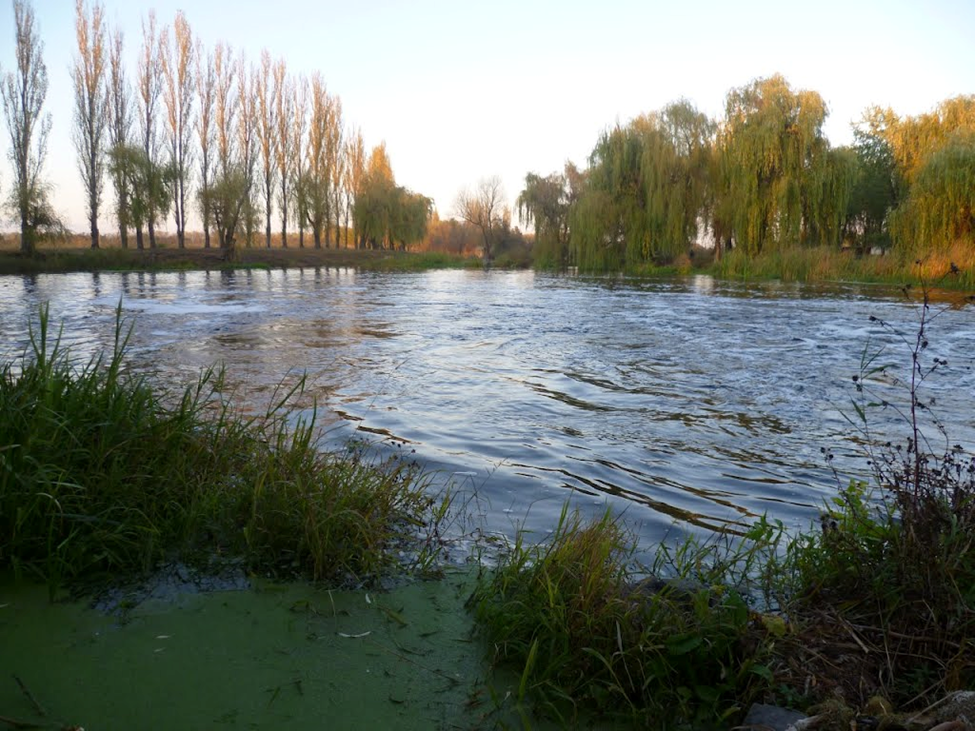
View of the Southern Bug River near Savran

Trigger Warning: Graphic Violence Described Below

Introduction

Growing up in middle-class New Jersey in the 1980s and the 1990s, the horrors of the Holocaust seemed like distant echoes in other people’s ears. I knew Holocaust survivors and those born in the Displaced Person (DP) camps of central Europe – and I was exposed to the graphic truth as part of both my secular and religious education. Still, the reality of it seemed distant because my own ancestors had come to the US decades before those horrors. My kind of life makes that violence unthinkable.

Paradoxically, although the horrors of the pogroms that arose in the aftermath of WWI had happened longer ago, they felt closer to me because my grandmother was close to me. Rose Broitman Telles, my maternal grandmother, lived just a few doors down from us and was a constant presence in my childhood. She occasionally told me snippets of stories of her childhood. Of being born in the small shtetl of Savran in Podolia, of her father being a lumber merchant, of being hidden as an infant in a Russian stove while soldiers ransacked Savran with overwhelming violence - a crucifix around her neck as a sign for mercy from the mob, of fleeing Savran with the help of local peasants who had worked for her family – only to be robbed by them and others. Of the dangerous flight from Podolia to Romania, where they lived in poverty for several years. And finally, of their deliverance to freedom in Canada and eventually the United States. You can read about details of their immigration experience here, here, here, and here.

By Hanna Zelenko, CC BY-SA 4.0, https://commons.wikimedia.org/w/index.php?curid=3664417
Russian stove in a peasant hut. Wikipedia.

Grandma Rose was an infant when she left Savran and barely more than a toddler when she left Romania. Her details of the events of her early life were based on stories she had been told by her parents, older siblings, and relatives. And my grandmother was not great with details. In contrast, I’ve been obsessed with discovering the details of our family’s story. This post describes the massacres they were fleeing from. 

The Ukrainian War of Independence: A Primer

There are a few things that you need to know about the Ukrainian War of Independence to put what happened in Savran into context. Jews had been in what is now Ukraine for several centuries, in part invited by Polish aristocracy to manage the economy as Christian peasants worked the land as serfs. Jews were the merchants, the tavern keepers, the money lenders, and the crafts people.

World War I saw the fall of the great empires of Europe, including the Russian Tsars who controlled what is now Ukraine for hundreds of years. With the monarchy toppled, there was a power vacuum in Ukraine. Three main groups fought to fill that vacuum:

  • The White Russians, who sought to revive the Tsarist monarchy. Anton Denikin was their most prominent general. 
  • The Red Russians, who sought to create a communist/Bolshevik/Soviet state. Mikhail Frunze and Vladimir Antonov-Ovseenko were the most prominent generals for the Red Army.
  • Ukrainian nationalists, who sought to create an independent, democratic, and pluralistic Ukraine. Symon Vasyliovych Petliura was their most prominent general. 

In addition to those three groups, there were unaffiliated warlords, bandits, and anarchists who sought nothing but wealth for themselves. 

All of these groups had one thing in common. Each targeted Ukraine’s Jewish population. The Whites saw the Jews as communists, responsible for the fall of the monarchy and the assassination of the Tsar. The Reds saw the Jews as capitalists, taking advantage of the labor class. And while the urban Ukrainian intelligencia saw Jews as a vital part of a future independent state, the soldiers fighting the war on the ground saw Jews as foreigners in their midst responsible for the poor conditions of the peasants.

Orthodox Church in Savran, built 1912. The building is now the “House of Culture.” Courtesy of the Savran Library.

This is the background for what happened between 1917 and 1921 in hundreds of towns across Ukraine, including Savran. Multiple first-hand accounts of the violence of these years in Savran are quite consistent. Based on those accounts, I’ve developed the timeline of atrocities below. 

The Terrors of Savran

March 1917: Red Soldiers Come To Savran

A Jewish self-defense group, "Agudat Hamagen," was created- led by a Dr. Klein (or perhaps Dr. Adelman, according to Gootnick, 1987) to protect the Jews of Savran in the absence of civil authorities. The peasants of the town demanded that they be disarmed, but the group refused.

A few weeks later, a small group of Red soldiers came through the town en route to nearby fighting. Several of these soldiers were drunk. The Agudat Hamagen shot some bullets into the air to scare these soldiers off, but somehow one soldier and his horse were shot and killed during a confrontation.

Fearing retribution, Dr. Klein fled with his son, but was caught and beaten nearly to death by peasants. His father-in-law, Leib Kirzner (or Alters in another account), was arrested and later brutally killed for refusing to reveal the location of Jewish weapons. 

The chaos worsened as Jewish homes were looted and set on fire. Local peasants joined in with the soldiers, escalating the violence. Although the Jewish self-defense group managed to drive off some of the attackers by standing guard and firing shots throughout the night, the violence continued.

Dr. Klein and his father-in-law were eventually killed. “The peasants made a circle around him with music playing, and  began dancing. They killed him using whatever they had, including stones and wood, causing his blood to spill all over the street until he was dead and cut up into pieces.”

The Agudat Hamagen was no more, and there was nobody remaining to protect the Jews of Savran from the horrors to come.

September 1919: Bandits

In September 1919, a warlord named Kazakov arrived in Savran with a group of armed mercenaries. They kidnapped two of the local rabbinical judges, Rabbi Kalman Berditchevsky and Rabbi Zvi Braverman, as well as a local philanthropist Yakel Dechtyar. The bandits killed seven Jews as they fled the village for the countryside. Kazakov kept the rabbis as hostages and sent Mr. Dechtyar back to Savran to collect 200,000 rubles cash, clothing, boots, and dry goods as ransom.

In a period of about an hour, the town gathered the funds and sent it to Kazakov, but the delegation that carried the money did not find the mercenaries. Instead, they found the rabbis dead, having been mutilated. A peasant who remained with the rabbis’ corpses related that they had been tortured to death and their beards shaved off.

The bandits used them for sadistic entertainment.They had been ordered to sing a Sabbath hymn and to dance and afterward forced them to eat eggs with ash. Later, the townspeople found two sons of a local resident Moishe Bershadsky that had been shot to death and thrown into the Bug River. These boys were cousins of my grandmother.

By Unknown author - This image is available from the United States Library of Congress's Prints and Photographs divisionunder the digital ID anrc.05416.This tag does not indicate the copyright status of the attached work. A normal copyright tag is still required. See Commons:Licensing., Public Domain, https://commons.wikimedia.org/w/index.php?curid=12748809
Anton Denikin, leader of the Tsarist White Army during the Ukrainian War of Independence. 

December 1919 – March 1920: The Whites Attack

The worst violence to befall Savran occurred at the end of December 1919 and continued into the early months of 1920. It was then that the notorious Wolf Brigade of the White Russian Army came to Savran en route to nearby Kryvoe Ozero. In the course of this period, they managed to kill many Jews in a series of deadly pogroms, often aided by local peasants. Here are a few accounts of what occurred:
  • As the Wolf Brigade rampaged, “…those who hid in holes and cellars froze and became sick from the cold and hunger. Parents did not know the fate of their children and children did not know the fate of their parents.”
  • “All the Jews were killed by crude weapons. One Jew pleaded to be killed by a rifle and got this answer: ‘Every bullet is now very expensive, pay us the bullet price, and you will get killed this way’.”
  • “Many children froze to death, in addition, they abducted the wives and violated young girls.”
  • “The killing lasted three days, and after ten more days, more Danikinian factions came, and again butchered, raped, robbed and pillaged the town’s Jews. The casualties’ toll came to approximately 800 people. Many of the Savarn Jews fled to the nearby villages where they died of cold or hunger.”
  • “They took 200,000 rubles out of the old man Boyes hands and promised when he gave the money they would let him live. But after taking his money, they put him against the wall, poured oil on him, and torched him alive. While he burned, they counted the money in front of his eyes. Then they killed his son.
  • “They found Saul Chenoaus’s five-year-old son hiding under his bed. They asked him “Where is your father?” "I don’t know," the boy said. Immediately they cut him to pieces and threw his remains to the dogs.”
  • “Israel Arages' wife, a very beautiful and graceful women, they took, raped, and decapitated.”

April 1920: The Local Peasants Make Their Intentions Clear

Around Passover 1920, a Jewish student from Savran traveled to Odessa with two Christians, transporting two wagon loads of sugar. They spent the night at a train station where the student had 35,000 rubles stolen from him. Reporting the theft to the new Bolshevik authorities, a search was conducted leading to the arrest of the two Christians, who were found with a large sum of money, counterfeit currency, two revolvers, and the confiscated sugar. Upon learning that the two Christians had not returned, the peasants of Savran responded with threats of violence towards the Jewish community, posting a proclamation that demanded the release of their people. This “warning” to the Jews of Savran said: 

Tatars, Kikes, and Communists
If you don't return our people to us, we will cut all of you. Petliura's men cut you but didn't finish. Denikin's men cut you but didn't finish. We will kill all of you; even a child in a cradle will not be spared. 
Union of Exterminators 

Testimony of Mademoiselle Bersheider about the incident with the students returning from Odessa. The account is written in Yiddish and Russian. This incident is also described in “Hebrew Yearbook for Autobiography, Ethnography and Folklore - Reshumoth”

Essentially, this “Union of Exterminators,” made up of individuals from the Savran community, was saying that while the Ukrainian Nationalist Army (Petiura) didn’t kill all of the Jews and the White Army (Denikin) didn’t kill all of Jews, they’d finish the job if the two criminals weren’t returned. An especially chilling note considering that the Jews of Savran were not the ones in custody of the two men. 

June 1920: The Whites Return

Factions of the White Russian army came back to Savran as they were fleeing defeat by the Red Army. They joined with local gangs and seized approximately 200 women and girls who they then raped, mutilated, and burned alive. Reports indicated that “old people were butchered, and little children were torn to pieces which were thrown to the faction's dogs.” The Jews cowered in cellars. Others tried to leave the town but were killed as they tried to flee. 

Their situation did not improve even after the White Russians left, as the town saw a period of disease and starvation. The war had brought typhus to almost every family, and there was no medical treatment available.

September 1920: The End to the Violence?

By fall of 1920, the Soviets were in clear control of this part of Podolia. There were several incidents of violence against the Jews of Savran by local peasants, but Red Army soldiers tamped down the violence with threats to local Christian leaders. However, the Jews of Savran had nothing left. So many had been killed, fled, or died of disease that their once vibrant community was essentially destroyed. Those who remained were traumatized and had no livelihood to return to. Years of war made food scarce. In short there was precious little hope for their future.

Le Village En Feu (Village on Fire) – Marc Chagall - 1940 

Afterwards

The Reds, the Whites, and the local gangs all targeted the Jewish population of Savran even though they had no knowledge of them personally. Jews were worth humiliating, robbing, raping, and killing just because they were Jewish. Each group had rationalization and pretext, but in the end, it is just another example of sadistic antisemitism. It is just one in a long line of inexcusable terrors that have befallen the Jews for more than two millennia. 

My family was there. I don't know when they left Savran. I don't know what atrocities they personally faced. I don't know how the trauma affected them then or for the rest of their lives. And I don't know how it affects me generations later. 

When the atrocities perpetrated against innocent Israelis on October 7, 2023 started becoming clear, every newscast said that it was the “biggest massacre of Jews since the Shoah.” But my mind went to Savran. Never again should never have had to be said.

Bibliography

Accounts of the Savran Pogroms

General References on the 1917 - 1921 Ukrainian Pogroms 

  • Avrutin, Eugene M., Bemporad, Elissa. (2021). Pogroms: A Documentary History. Oxford University Press.
  • Bemporad, Elissa (2019). Legacy of Blood: Jews, Pogroms, and Ritual Murder in the Lands of the Soviets. Oxford University Press.
  • Coder, Aaron. (1921). Ukrainians And Jews: After The Downfall Of The Russian Empire, 1917-1920. Second edition. Independently published.
  • Batchinsky, Julian. (2018). The Jewish Pogroms in Ukraine Authoritative Statements on the Question of Responsibility for Recent Outbreaks, Against the Jews in Ukraine. Forgotten Books: London, UK.
  • Granick, Jaclyn (2021). International Jewish Humanitarianism in the Age of the Great War. Cambridge University Press. 
  • Heifetz, Elias. (1921) The Slaughter of the Jews in the Ukraine in 1919. Seltzer: New York, New York.
  • Evidence of Pogroms in Poland and Ukraine: Documents, Accounts of Eyewitnesses, Proceedings in  Polish Parliament, Local Press Reports, etc, (1919), New York: Information Bureau of the Committee for the Defense of Jews in Poland and Other East European Countries affiliated with the American Jewish Congress.
  • Shtif, Nokhem and Wolfthal, Maurice. (2019). The Pogroms in Ukraine, 1918-19: Prelude to the Holocaust. Open Book Publishers. Translated and annotated by Maurice Wolfthal. Cambridge, UK: Open Book Publishers.
  • Veidlinger, Jeffrey. (2021). In the Midst of Civilized Europe: The Pogroms of 1918-1921 and the Onset of the Holocaust. Metropolitan Books: New York, New York.


Tuesday, September 10, 2024

Abram Broitman Arrives In Canada

Arrival and Processing

On July 29, 1924, after nearly three weeks at sea, the S.S. Asia docked at Pier 2 in Halifax with Abram Broitman on board. He had left his temporary home in Bucharest just weeks before, departing from Constanța on 9 July while Jewish aid organizations prepared for their arrival.   

Halifax Harbour, circa 1920. Halifax Municipal Archives. A published map of Halifax and Dartmouth surrounded by business listings and advertisements, fire box numbers, a street index, and a geographic description of Halifax's wards and boundaries. Printing by Royal Print & Litho Limited. CR10-082

When they disembarked, the refugees were in rough shape. Previous groups had arrived “all looking haggard and tired out through sleepless nights and lack of food,” and this group was no different. In fact, when American representatives from the New York-based Joint Distribution Committee (JDC) saw the S.S. Asia passengers in Montreal a few days later – they happened to be there to discuss funding the refugee program -- they described the refugees as a "very scary spectacle:" 1 

"[N]early all of them are underfed, and on this account, exposed to all sorts of ailments… [including some who have] contracted tuberculosis . . . The Canadian immigration officials were more than merciful in dealing with these 380 immigrants. The physical examination that they were subjected to, was carried on in a most merciful and sympathetic manner. Some of these aliens never would have been admitted to the United States, even in the absence of quota regulations.”

In Halifax, Abram and his fellow passengers disembarked at the pier and underwent the standard Canadian immigration inspections. Many of them likely would have been detained or even deported if not for the intervention of Canadian Jewish aid organizations. Volunteers from the Jewish Immigrant Aid Society (JIAS) – Mr. Charles Zwerling, Mr. Harry Kitz, and Miss Bertha Goldberg – were on hand to meet the ship, and they shepherded the refugees through the entrance procedures. 

A group of 350 refugees who arrived at Halifax on SS Asia six months earlier than Abram Broitman in January 1924. Photo taken in the Halifax New Pier 2 Canadian assembly area.  Ontario Jewish Archives, Item 694.

A small office was provided for JIAS to use in the immigration building at Pier 2. After their initial inspections, Abram and his fellow passengers proceeded there to undergo further interviews. They were questioned about their occupations (Abram was a lumber merchant, but said he was a farmer;) marital status (Abram was married, but said he was single;) financial resources (Abram reported that he had $10;) and the names of any relatives in the U.S. or Canada (Abram mentioned that he had cousins in Philadelphia.) Unsurprisingly, the refugees displayed significant fright when faced with questions about their former homes in Ukraine, conditions in Romania, and the status of other refugees trapped in ports around Europe. 

SS Andania and other vessels docked Pier 2, the Deep Water Terminals, Halifax, NS.
W.R. MacAskill, Nova Scotia Archives, 1987-453, no. 2625.

Allocation

Deciding where in Canada to send the refugees – to Montreal, Toronto, Winnipeg, or points west -- was tricky. The primary mandate of the JCA was to establish agricultural colonies where Jews could find a secure livelihood and economic self-sufficiency. This was in line with the conditions laid out by the Canadian Dominion government, which stipulated that a percentage of the new arrivals work in agriculture. But the refugees were not suited for farm work. Not only were they in poor physical condition, but they had absolutely no experience: back “home” in the Russian Empire, Jews had been explicitly barred from agricultural work.

Negotiations about assignments ensued, conducted via telegram and letter, among the various stakeholders in each location. Factors such as the health of the refugee, family composition, and proximity to relatives were supposed to be used to make the decision; but according to internal JCA correspondence, the determination was often left to the last minute, and it ultimately came down to how many refugees each community could absorb. While Abram had prudently indicated that he intended to be a farmer, his passenger record shows that he was instead assigned to Montreal, which was then crossed out and changed to Toronto.  

The Journey West and Reception

Once their destination assignments were determined, Abram and his fellow refugees were escorted to special train cars on Canadian National Railways. According to an internal JCA memo2, 

“A special car containing a cafeteria was attached to our training, which distributed hot water free to the immigrants. A reduced rate of 5¢ for a cup of tea or coffee was offered to those who wanted to drink their tea at the counter. A Pullman car was attached to the train to give us every possible comfort on our journey. Mr. Morrison and a special Inspector of the Dining Car and Pullman service were on board the training and extended to us every courtesy and assistance. A special conductor speaking Yiddish was ordered to accompany the immigrants as far as Winnipeg.”

When the train reached Montreal, only those assigned to be settled there were permitted to disembark. Everyone else was forced to remain on board with the train doors locked. Previously, refugees bound for Toronto and points west had been allowed to briefly disembark in Montreal; many of them promptly vanished into the city, simply failing to show up for the next leg of their journey west. The JCA representatives were determined not to let that happen again.

Of the 380 refugees who sailed on the S.S. Asia, 49 were sent to Toronto, Abram among them. Upon arrival, they were greeted by representatives of JIAS and the local Jewish community. Records from November 1924 list Abram’s address as “Toronto, Ontario; Ave. 11.” 

Abram was finally safe. His family, however, was still in Romania -- and still in jeopardy.


1. Letter to David Bressler, JDC, 12 August 1924 from Joseph B. detailing his trip to Montreal over the previous weeks. Archives of the Joint Distribution Committee. NY_AR2132_03903
2. JCA memorandum describing the procedures surrounding the arrival of refugees in January 1924. Erroneously dated 7 Jan 1923. Alex Dworkin Canadian Jewish Archives ICA-S-CB-18-1924